Monday, March 02, 2009

THE PRICING ISSUE

by Richard Polsky

Exhibit A: The biggest issue facing the art business is that no one knows what anything is worth. Yet everyone I talk to seems to know exactly what their property is worth -- it’s still worth what it was before the crash!
The other day, I had a request from a collector who wanted a commercial yet attractive Andy Warhol print -- Turtle (1985), more commonly called Sea Turtle. With that in mind, I placed a call to an equally commercial gallery in Los Angeles, who boasts one of this country’s largest inventories of Warhol prints. A brief conversation with the director revealed that yes, in fact, they did have a Sea Turtle silkscreen for sale. I was told they wanted a net of $16,000.

I responded, "Sounds like the old price."

The gallery director said, "It is."


We then went on to have an asinine conversation about how his gallery bought the print at the height of the market, for $16,000, and he refused to take a loss. Ditto for much of the rest of his inventory. I countered, "How do you expect me to pay a former retail price, when the market might be down 50 percent?" The gallery director’s rebuttal? Something to the effect of, "It’s up to you if you want to pay it or not."

I said, "Maybe my thinking is flawed, but I don’t want to pay twice what something might be worth. Assuming there are others who think like me, how do you expect to make a living?"

At this point, the discussion took off into the ozone. The director said, "We’ve been offering to buy A+ paintings from clients who are desperate for cash. But, of course, we expect to pay very little. That way, we can pass along good deals to our clients who are still buying."

I said to him, "Let me try and put this into perspective. You want me and my client to overpay for inventory that you overpaid for. Yet you personally want to be able to buy at the new heavily discounted prices -- probably from the same people you sold the work to originally at the former high prices?"

There was silence in Los Angeles.

Unfortunately, most of what I’ve been hearing has been only a slight variation of the above "pretzel logic." It’s kind of like someone who has their home on the market and refuses to adjust his price to the new reality. The seller has an emotional attachment to his property, leading him to believe that his home is different. It hasn’t gone down in value because it’s such a beautiful house, while his neighbors’ homes have declined in price because they’re not as nice as his.

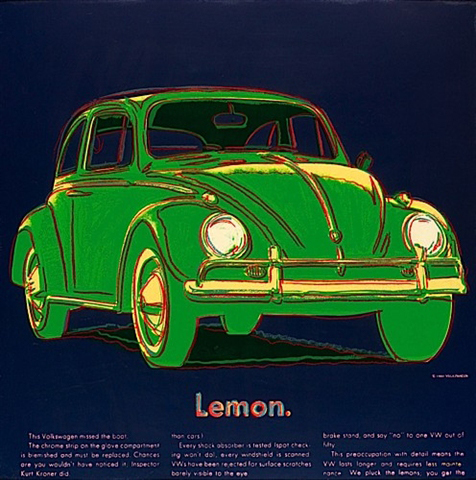
Exhibit B: The second biggest issue facing the art market is lying. That is to say, dealers who lie about what they paid for something. This is exactly what I experienced the other day when I went searching for a very specific painting from Warhol’s late "Advertising" series. While scanning Artnet’s 53 pages of Warhol listings, I was actually able to track down the very painting my client wanted. Within minutes of sending an inquiry to the dealer offering it, I received the following response, "We paid $200,000 for the picture but are willing to accept $140,000."



On the surface, this seemed like a magnanimous offer. Here was a colleague that I never met, sharing the cost of his inventory with me, as if we were lifelong partners. The implied message was look how open and honest I am. Now, I suppose this person could be telling the truth. But I doubt it. If we agree that the art market’s current demise began with the November 2008 New York auctions, then we are only three months into the industry’s recession. I found it difficult to believe that someone was willing lose $60,000 this quickly. Sure, they might be desperate. But the problem with that theory is that if they were really starved for cash, they would have to be more realistic and price the painting at its current fair market value: under $100,000. While the aforementioned "Exhibit A" anecdote represents one extreme position ("I won’t take a loss"), here’s the other end of the spectrum.



With the May auctions less than three months away, now is the time for dealers to be honest with themselves. If they have any real hope of selling their inventory, they need to cut out the rhetoric. If you believe that the auction house strategy this spring is going to be smaller sales, rock bottom estimates, and a "sell it at any price -- but sell it!" mentality, you have to beat the auctions at their own game. If you’re a collector, you need to go to the dealer and make an offer based on what you think the painting will be worth once the May sales conclude. If you’re a dealer, you need to price your inventory the same way. Or you can you expect the end results from Exhibits A & B -- neither dealer made a sale.
Monday, February 09, 2009

The Good, the Bad, and the Greedy (From ArtNet.com)

Lately, I’ve been doing a lot of grief counseling for art dealers.
-- Kay Richards, owner Ikon Ltd., Santa Monica

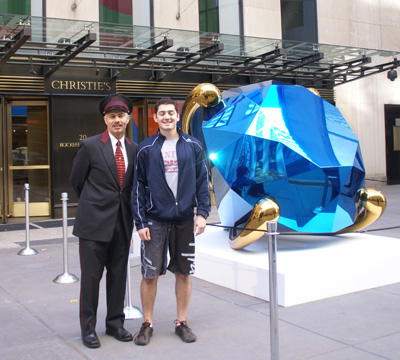
In 1990, when the art market entered its last big period of contraction, the sense of panic was palpable. Everyone was paralyzed. No one knew what anything was worth. Heck, no one knew if there was still an art market. From a dealer’s perspective, the 1980s had been about representing either the hottest artists or having top-notch resale material; you didn’t have to be civil if you had the right pictures available. Abuse was expected and dished out. The only person who stayed nice was Gil Perez, the doorman at Christie’s.


While I miss the exuberance of that era, I don’t miss being mocked for not flying first-class, staying at the best hotels, or dining at appropriate restaurants (though I do sometimes wonder whatever became of wearing Belgian shoes). I also don’t miss all the Long Island housewives masquerading as art dealers, watching colleagues stuff their faces at the auction-house Sunday preview brunches, or having to genuflect to dealers who had instituted a waiting list for their most desirable artists.


At the beginning of the 1990s, the battle cry among dealers was, "Stay alive until ’95." Many didn’t. By some estimates New York lost 40 percent of its galleries and blue-chip art declined in value by two-thirds. Nobody has any idea how many artists dropped out. The established artists whose prices declined the most were the ones who experienced the greatest speculation -- Ed Ruscha and Donald Sultan among them. Their prices dropped an amazing 80 percent from their high-water marks. As we know, Ruscha’s market came back and then some. As for Sultan’s. . . .


To put the numbers in even bolder relief, during the market’s nadir in 1993, things had gotten so bad that an average quality 12 x 10 in. baby Warhol Mao failed to reach its $20,000 reserve at Christie’s. It wound up selling after the sale for only $15,000. By 2005, the price for a small Mao, admittedly a superb example, crested at $2.25 million (in the David Whitney sale at Sotheby’s in November 2006)! Even better, the painting had been a gift from Warhol to Whitney.


During the market’s fallow years, a funny thing happened -- everyone became more collegial. Dealers who wouldn’t give you the time of day (let alone let you use their bathroom) suddenly greeted you like an old friend when you walked into their space. Some even humbled themselves by doing the ultimate penance -- they looked at artists’ slides!

Trying times produced a spirit of community and cooperation. And that’s precisely what’s starting to happen now. I can already sense a return to civility. A recent conversation with an auction house department head was very revealing. He sounded almost jubilant. Why? He was relieved that the pressure was off. No longer would he be abused by consignors, demanding a zero percent seller’s fee, a piece of the buyer’s premium and, while you’re at it, how about a guarantee plus the lion’s share of the upside?


The bottom line was that the evening sales would now be smaller, looking to gross $100 million rather $200 million-$300 million. The material offered would be more carefully pruned and pre-sale estimates would also be more conservative -- if consignors didn’t like the suggested price range, then they didn’t have to consign. In other words, the auction business is about to return to putting profits ahead of market share at any cost. While some claim that no one will consign anything of quality in a down market, the auction firms can always count on a steady flow of estates.


As is true of every turn of the boom-and-bust cycle, the talk is once again about returning to basics. As Carol Vogel recently wrote in the New York Times, we can expect a pronounced shift to buying artists who have held up over time, like Alexander Calder. Gone, maybe forever, are crazy prices for historically unproven (and heavily speculated on) artists such as Damien Hirst, Peter Doig, Takashi Murakami, and others.


As for emerging talent, you can forget about artists getting shows right out of art school. You can also kiss good-bye the slew of painters that even most art market professionals have never heard of. Flipping through Christie’s and Sotheby’s Part Two day sale catalogues, I came across many little-known artists whose works were estimated to sell for in excess of $100,000. Perhaps that reveals my shortcomings as an art-world observer. But no artist should cost that kind of money without having at least a modest reputation.


And then there is the slew of Chinese painters whose realist works seem, to many of us, to be merely derivative of Western art. In an art market shot through with irrational exuberance, the prices paid for Chinese contemporary have been the most irrational of all. The 21st century may belong to China, but could contemporary art possibly belong to these Chinese artists? Even a gallery as conservative (and significant) as L&M Arts couldn’t resist hopping on the Chinese art bandwagon. It makes you wonder how dealers like PaceWildenstein and James Cohan, which have invested heavily in having a gallery presence in China, are going to fare -- you notice Gagosian Gallery stayed away.


Another accurate barometer of the times is the thickness of art magazines. When dealers are flush they advertise. When the worm turns, the first thing they cut is their promotional budget. That also means less lavish dinners after opening receptions and less expensive catalogues and announcements. In fact, the transition to sending show notifications out via e-mail, saving on postage and printing, is well under way. The current market turndown will probably complete the process. For that matter, look for galleries to schedule fewer exhibitions next year.

The good news is that dealers will work harder for their artists who have been proven moneymakers. Suddenly, having salable artists who consign you works looks a lot better than having to buy inventory. You might make less money, but your capital won’t be at risk, either. The next few years will also give artists an excuse to move on to other galleries that offer a better fit. I can’t tell you the number of artists who until now have been reluctant to switch galleries, since in most cases it would result in a lateral move. Sometimes, like a bad marriage, it’s smart to move on just for a change of scenery. You need to go where you are appreciated -- rather than allow inertia to slip in because of fear of the unknown. Ditto for dealers who decide to trim their rosters of artists that they no longer believe in or can’t successfully promote.

In the end, future success in the art market may simply come down to good old-fashioned perseverance. Or as Larry Gagosian put it, in an e-mail allegedly sent to all members of his staff: "I work 18 hour days, why don’t you?"
My photo
is the author of the forthcoming I Sold Andy Warhol Too Soon (Other Press), is a private dealer in Sausalito. Questions or comments can be directed to: Richard@PolskyArt.com